Shopify CRO for Beauty Brands: Ingredients, Trust Signals, and Repeat Purchase
Beauty brands have some of the highest Shopify conversion rates in DTC — but only when product education, trust, and ingredient transparency are done right.
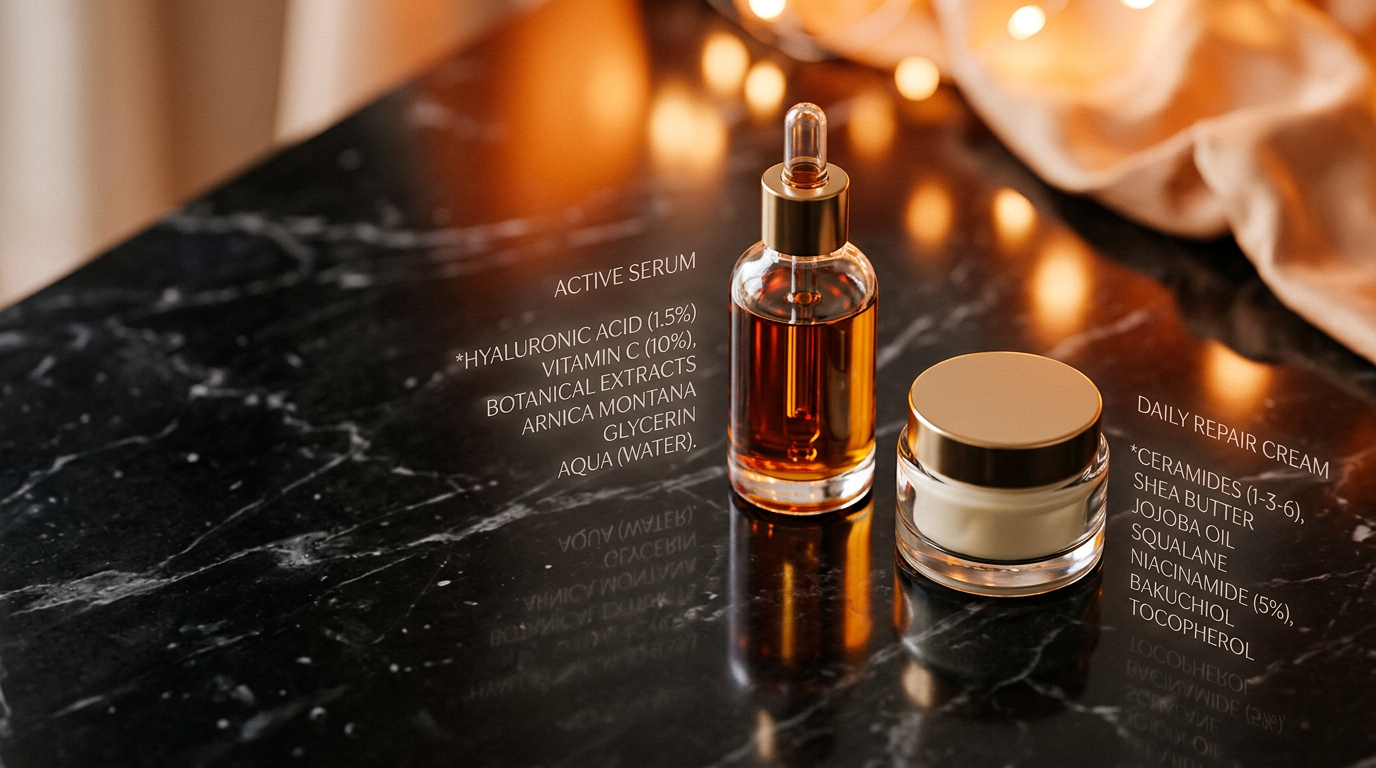
Beauty brands consistently achieve the highest Shopify conversion rates in DTC — 2.8% to 4.2% for well-optimised stores. The category has structural advantages: repeat purchase intent is high, the product proposition is specific, and ingredient-literate customers are highly motivated buyers. But these advantages only convert when product education, ingredient transparency, and trust signals are built into the store correctly.
Why Beauty Converts Well (When It Does)
The modern beauty customer is unusually educated. They research ingredients, read reviews in detail, and make purchase decisions based on formulation quality rather than packaging alone. This is a CRO advantage: a customer who has done their research and arrives at your product page with high intent will convert readily — if you do not create friction by withholding the information they need.
The brands that convert poorly in beauty are almost always those that treat product pages as visual showcases rather than information-rich decision pages. Beautiful imagery is necessary but not sufficient.
Ingredient Transparency as a Conversion Driver
The full INCI ingredient list, presented with plain-English explanations of key actives, is one of the highest-converting content elements on a beauty product page. Not because all customers read it — most do not — but because its presence signals honesty and confidence in the formulation.
Best practice: lead with two or three hero ingredients with a one-sentence benefit statement each ("2% Niacinamide — minimises pores and regulates sebum production"), followed by a collapsible full ingredient list. This structure serves both ingredient-literate customers who want the detail and visual customers who just need the headline benefits.
Before and After Photography
In beauty, before/after imagery is the highest-converting social proof format. It resolves the primary purchase question ("will this work for me?") more powerfully than written reviews because it removes abstraction. A customer who sees a before/after that matches their skin concern converts at 2-3x the rate of one who reads a text review describing the same outcome.
Implementation: include before/after images in the product gallery (not just as a section lower on the page), ideally showing multiple skin types and tones. Customers need to see someone who looks like them. A single Caucasian before/after on a product targeting acne — a condition that affects all skin tones — leaves the majority of potential customers without an identity anchor.
Review Velocity and Specificity
The number of reviews matters for beauty conversion rates — a product with 200 reviews converts at a meaningfully higher rate than an identical product with 12 — but review specificity matters more. A review that says "my skin looks clearer after three weeks, the texture is lighter than I expected, and it absorbed completely without pilling under SPF" is worth twenty five-star reviews that say "love this product!".
Review collection strategy: ask specific questions in your post-purchase review request email. "How is your skin looking after two weeks?" produces better reviews than "Tell us what you think." Guide customers toward the specific observations that reduce purchase uncertainty for future buyers.
Skin Type and Concern Filtering
Beauty customers arrive with a specific skin concern: acne, hyperpigmentation, dryness, ageing. A product page that speaks to all concerns simultaneously speaks to none powerfully. Collection pages that allow filtering by skin type and concern — and product pages that lead with "Best for: oily/combination skin" — dramatically reduce the cognitive load of the purchase decision.
This requires either a Shopify metafields setup to tag products by skin type, or a collection structure organised around concerns rather than product format. A Shopify development approach that builds this into the product taxonomy once pays conversion dividends indefinitely.
The Routine Upsell: Lifetime Value in Beauty
Beauty customers who buy into a routine spend 3-4x more per year than single-product buyers. The "complete your routine" cross-sell — positioned on the product page as a curated recommendation rather than a list of products — lifts both first-order AOV and repeat purchase rate.
What works: a "Build your routine" module below the fold on product pages, showing the step before and after the current product in a typical AM or PM routine. Include a bundle discount for the full routine (10-15% off). This is a CRO and development project that typically pays back within the first month.
Repeat Purchase: The Real Beauty CRO Metric
The most valuable CRO metric for beauty brands is not initial conversion rate — it is the percentage of first-time buyers who make a second purchase within 90 days. A brand converting at 2% with a 45% repeat purchase rate is more valuable than one converting at 3.5% with 15% repeat.
Subscription offerings, re-order reminders at the typical product depletion window, and "your routine is running low" emails are all high-ROI retention mechanics for beauty. CRO in beauty is not just about the first purchase — it is about designing the entire post-purchase experience to ensure the customer returns.
Frequently Asked Questions
What is a good conversion rate for a Shopify beauty brand?
Well-optimised UK beauty brands convert at 2.8–4.2%. The higher end of this range is achievable for brands with strong social proof, ingredient transparency, and clear skin-concern targeting. Brands below 2% typically have product page education gaps — missing ingredient context, thin reviews, or no before/after imagery.
How important are ingredients for beauty Shopify conversion rates?
Very important — and increasingly so. UK beauty consumers are more ingredient-literate than ever. A product page that leads with hero ingredient benefits and provides a full INCI list converts at a higher rate than one that only shows packaging and claims. Ingredient transparency signals confidence in the formula and reduces purchase uncertainty.
Should beauty brands offer subscriptions on Shopify?
Yes — for consumables with a regular usage cadence (serums, moisturisers, cleansers). Subscription reduces repurchase friction and increases lifetime value. The key to adoption: show the cost comparison explicitly, and emphasise skip/pause flexibility. Customers resist subscription when they feel locked in. Remove that perception and subscription adoption rates typically reach 15–25%.
How do before and after images affect beauty conversion rates?
Before and after imagery is consistently the highest-converting content format in beauty DTC. It resolves the primary purchase uncertainty ("will this work for me?") with visual proof. Brands that include before/after images in the product gallery — showing multiple skin types and tones — typically see 20–40% higher conversion on the products where this content exists.
Beauty CRO Built Around Your Formulations
We understand the beauty buyer. Book a call to discuss how a category-specific CRO programme can lift conversion rates and repeat purchase for your brand.
Book Strategy Call